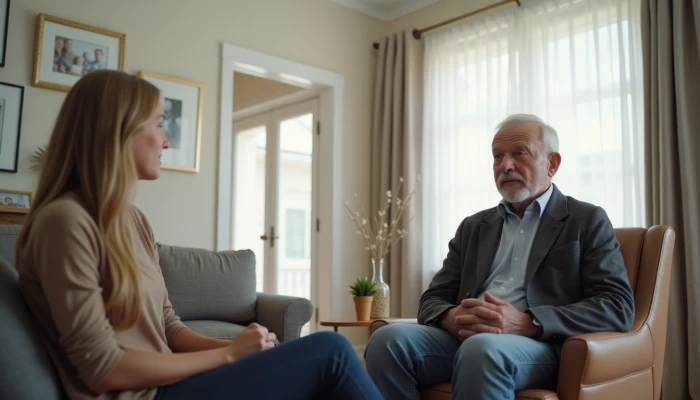
How to Talk with an Older Man About Mental Health Without Pushing Him Away
Talking about mental health with an older man in your family can feel delicate. You may notice that something seems off, but every attempt to bring it up risks being brushed aside, joked away, or treated like criticism.
That tension is real. Many older men grew up with strong messages about privacy, toughness, and keeping personal struggles to themselves. Family members may care deeply and still feel unsure how to start a conversation without making things worse.
This is where a calmer, more tailored approach helps. Instead of trying to force a breakthrough, it can be more useful to understand the barriers first, notice how distress may show up, and speak in ways that protect dignity while still being honest. That kind of approach does not guarantee openness, but it can make support feel safer and more acceptable.
Understanding Generational and Gender-Specific Barriers
Older men often carry messages from earlier decades about what it means to be a man. In many families and communities, emotional control was treated as strength, while talking openly about sadness, fear, or loneliness was seen as weakness or something to keep private. That can make men's mental health conversations feel loaded before they even begin.
This does not mean older men do not feel distress. It often means they may describe it differently. They may talk about being tired, irritable, restless, or fed up rather than saying they feel depressed or anxious. Some may trust practical language more than emotional language.
Generational communication barriers matter too. A younger family member may value direct emotional honesty, while an older relative may prefer slower, less personal conversations built around routine, shared activity, or practical concerns. If the approach feels too intense or too sudden, he may hear it as pressure rather than care.
Male stoicism can also create a second barrier: pride. An older man may worry that admitting struggle will change how the family sees him. He may fear becoming a burden, losing authority, or being treated as fragile. Age-related stigma can add to this, especially if he already feels uneasy about changes in health, independence, or memory.
A more helpful starting point is to assume resistance is often protective, not uncaring. He may be trying to preserve dignity, control, or a familiar identity. When family members understand that, they are less likely to push too hard or turn the conversation into a debate about whether his feelings are valid.
Recognizing Signs of Emotional Distress in Older Men
Mental health warning signs in older men do not always look like obvious sadness. Distress may show up as emotional numbness in men, low patience, unusual anger, physical complaints, or pulling back from people and routines that once mattered.
Some signs of depression in men can be easy to miss because they overlap with aging, grief, retirement changes, or physical illness. That is one reason families sometimes wait too long to check in. A pattern matters more than a single bad day.
Watch for changes like these:
- less interest in hobbies, calls, meals, or family events
- more isolation or staying home without a clear reason
- increased irritability, cynicism, or emotional shutdown
- sleep changes, low energy, or a noticeable drop in self-care
- more drinking or using alcohol to cope with stress or boredom
- repeated comments that suggest hopelessness, worthlessness, or feeling like a burden
- frequent focus on aches, fatigue, or physical problems without discussing mood
Older men may also mask distress by saying they are "just tired," "just getting old," or "fine" when their behavior suggests otherwise. That does not mean they are being dishonest. Sometimes they genuinely do not have easy words for what is happening internally.
A simple way to think about it is this: look for change, duration, and impact.
| What to notice | What it can mean |
|---|---|
| A clear change from his usual personality or routine | Something may be weighing on him emotionally or physically |
| Symptoms lasting for weeks, not days | The issue may be more than temporary stress |
| Daily life getting smaller or harder | Support may be needed sooner rather than later |
Age-specific mental health risks can also include loneliness after retirement, grief after losses, anxiety related to health changes, and distress linked to reduced mobility or independence. Family members do not need to diagnose the problem. They only need to notice when the person they know seems less like himself over time.
Practical Communication Strategies for Family Members
The goal is not to win an argument about mental health. The goal is to make it easier for him to stay in the conversation.
Start with observation, not interpretation. Instead of saying, "You seem depressed," try naming what you have actually noticed. That lowers the chance that he will feel labeled or cornered.
For example:
- "I've noticed you haven't been going out much lately."
- "You seem more worn down than usual."
- "I've seen you pulling back from things you normally enjoy."
Open-ended questions usually work better than yes-or-no questions. They give him room to answer in his own style.
You might ask:
- "How have things been feeling day to day?"
- "What's been the hardest part lately?"
- "Have you been dealing with more stress than usual?"
- "What has your sleep been like?"
It can also help to connect the conversation to shared values. Many older men respond better when support is framed around staying steady, protecting health, being there for family, or getting through a hard stretch with backup. That approach respects his identity instead of challenging it.
A simple conversation sequence can help:
- Pick a calm moment, not the middle of conflict.
- Start with one or two specific observations.
- Ask a broad, respectful question.
- Listen longer than you speak.
- Reflect back what you heard without correcting it.
- Ask whether support would be welcome.
There are also a few common mistakes worth avoiding.
| Less helpful approach | More helpful approach |
|---|---|
| "You need help." | "Would it help to talk through what support might look like?" |
| "You're clearly depressed." | "I've noticed some changes that worry me." |
| "Why won't you talk about this?" | "I know this may be hard to talk about, and I'm here with you." |
| "You're making everyone worry." | "You matter to me, and I wanted to check in." |
If he shuts the conversation down, try not to treat that as failure. A first conversation may only plant trust. You can leave the door open by saying something simple like, "You don't have to talk right now, but I care and I'm here when you want to talk."
For some families, side-by-side conversations work better than face-to-face ones. Talking during a drive, walk, household task, or meal can feel less intense. That can be especially useful when generational communication barriers make direct emotional talk feel awkward.
If he is open to next steps, keep them small and collaborative. Rather than pushing one solution, ask what feels manageable. That might include talking to a doctor, reconnecting with a friend, improving sleep, or exploring men's therapy if he is willing. Stress management for men often starts with practical steps, but those steps are easier to take when the person feels respected rather than managed.
Addressing Age-Specific Mental Health Risks
Older men can face real mental health risks that deserve careful attention. Depression, anxiety, alcohol misuse, grief, loneliness, and the strain of physical decline can build on each other. Social isolation is especially important because it can quietly shrink a person's world and reduce the chances that someone else will notice a problem early.
Family support cannot replace professional care, but it can reduce silence and increase connection. Sometimes the most useful role is not fixing the problem. It is helping the older man feel less alone, less judged, and more able to accept support.
A practical family checklist can help:
- check in consistently, not only during obvious crises
- encourage routines that support sleep, meals, movement, and social contact
- notice whether alcohol use has increased during stress or loneliness
- help with logistics if he is open to professional support, such as scheduling or transportation
- be patient if hearing, memory, or cognitive changes affect communication
- involve trusted people when appropriate, such as a spouse, sibling, friend, faith leader, or clinician
Older men also face elevated suicide risk, especially when depression, isolation, illness, loss, or hopelessness go unaddressed. If he talks about feeling like a burden, says life has no point, or seems to be giving up in a way that worries you, take that seriously. Stay calm, stay present, and seek urgent support from local crisis services or emergency help if there is immediate danger.
When cognitive changes are part of the picture, communication may need to slow down. Keep sentences clear, ask one question at a time, and avoid overwhelming him with too many concerns at once. Patience matters. So does flexibility.
Encouraging professional help is often easier when it is framed as teamwork. You are not telling him he has failed. You are saying he should not have to carry everything alone. That shift can make support feel more acceptable to someone who has spent a lifetime trying to stay strong for others.
Conclusion
Talking with an older man about mental health usually goes better when family members lead with respect, patience, and specific observations instead of labels or pressure. The barriers are not just personal. They are often shaped by age, masculinity norms, stigma, and long-standing habits around emotional privacy.
That is why a tailored approach matters. Notice patterns, choose calm moments, ask open questions, and connect support to values he already trusts. If he is not ready at first, staying steady and nonjudgmental can still make a difference over time.
When extra help is needed, frame it as collaboration rather than criticism. A conversation does not have to be perfect to be meaningful. In many families, the most important step is simply making it safer to talk at all.