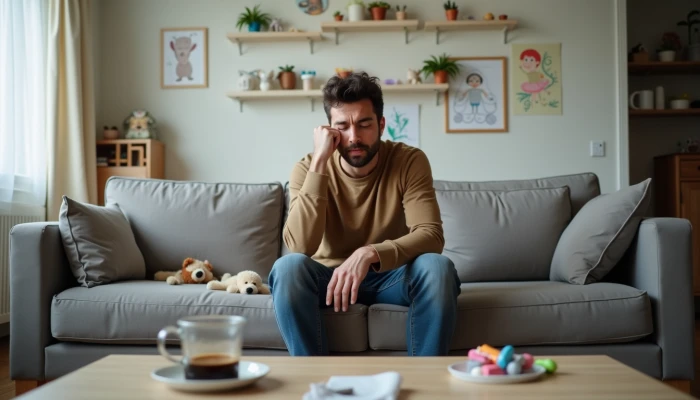
When Fathers Feel the Strain at Home and Inside Themselves
Fatherhood can bring meaning, pride, and connection. It can also bring pressure that is easy to hide and hard to name.
Many men are taught to stay steady, provide, and keep going no matter what. That can make men's mental health struggles harder to spot in fathers, especially when distress shows up as irritability, overwork, shutdown, or distance instead of obvious sadness.
When that happens, families often feel the effects before anyone has words for the problem. Tension rises. Communication gets thinner. Children may sense stress without understanding it. Partners may feel shut out or forced into guessing what is wrong.
This does not mean fathers are failing their families. It means silence has a cost. The good news is that small, realistic steps can make a real difference. Fathers do not need a perfect routine or a personality overhaul. They need honest language, workable habits, and support that respects their responsibilities as well as their limits.
The Cultural Pressures That Silence Fathers
Many fathers live under a familiar message: be dependable, be strong, do not complain, and keep the family moving. Those expectations can make it harder to admit stress, anxiety, or depression, even to a partner or close friend.
Cultural pressure on fathers often centers on the provider role. If work is intense, money feels tight, or family needs keep growing, a father may start to believe that his value depends on staying productive at all times. In that mindset, rest can feel selfish and asking for help can feel like weakness.
Research and clinical explanations on men's mental health often note that traditional ideas about masculinity can discourage help-seeking. If vulnerability is treated like failure, many men will delay support until strain has already affected sleep, mood, work, or relationships.
Fatherhood can also shrink a man's social world. Long work hours, childcare demands, and changing routines may reduce time with friends or hobbies. That isolation matters. A father can be constantly around people and still feel emotionally alone.
This pressure does not affect every father in the same way. But it helps explain why some men say they are "fine" while becoming more withdrawn, tense, or emotionally unavailable at home.
A useful reframe is this: support is not the opposite of strength. Support is one of the tools that helps fathers stay present, responsible, and connected over time.
Recognizing Hidden Struggles: Signs Fathers May Not Express
Not every father who is struggling will say, "I'm depressed" or "I'm overwhelmed." Sometimes the signs of depression in men are indirect, physical, or easy to dismiss as stress.
A father may notice headaches, back pain, stomach problems, poor sleep, low energy, or constant fatigue. Those symptoms do not automatically mean a mental health condition is present, but they can overlap with emotional distress and deserve attention, especially when they persist.
Behavior changes can be just as important. Some fathers cope by disappearing into work, sports, gaming, chores, or endless phone time. Others pull away from family activities, stop talking much, or seem checked out even when they are physically present.
Irritability is another common signal. Instead of looking sad, a struggling father may seem short-tempered, restless, numb, or angry after work. That can create confusion at home because family members may react to the anger without seeing the pain underneath it.
Here is a simple check-in list fathers can use privately:
- Am I more irritable than usual?
- Am I avoiding people I care about?
- Am I using work or distractions to avoid how I feel?
- Have sleep, appetite, energy, or motivation changed?
- Do small problems feel harder to handle than they used to?
- Do I feel emotionally flat, shut down, or disconnected?
None of these signs confirm a diagnosis. They are prompts to pause and look more closely.
If several of these patterns have been building for weeks, or if they are affecting parenting, work, or the relationship at home, it may be time to talk with a licensed professional or a trusted healthcare provider. That is especially important if anger, withdrawal, or emotional numbness is becoming the default way of coping.
Practical Steps for Fathers: Building Resilience Without Losing Identity
Fathers often reject advice that feels vague, unrealistic, or disconnected from daily life. The goal is not to become a different person. It is to build a few repeatable habits that lower stress and make support easier to accept.
Start small. Stress management for men is usually more sustainable when it fits into existing routines rather than competing with them.
A simple sequence can help:
- Pick one daily reset habit that takes 5 to 15 minutes.
- Tell one trusted person what has been feeling heavy.
- Notice one pattern that makes things worse, such as skipping meals, doomscrolling late, or staying at work to avoid home tension.
- Replace that pattern with one steadier response for the next week.
- If strain keeps building, book professional support instead of waiting for a crisis.
Examples of realistic reset habits include:
- A short walk before going into the house after work
- Ten quiet minutes without a screen
- A basic breathing or grounding exercise
- Going to bed at a more consistent time
- Writing down the top two stressors instead of carrying them all mentally
Peer support can also matter. Some fathers find it easier to open up in a men's group, a parenting group, or a private online support space before talking in depth with family. That first step can reduce isolation and make future conversations less loaded.
Professional help does not have to be framed as "something is wrong with me." A more useful frame is: "I want better tools for stress, communication, and staying steady at home." That approach often feels more practical and less threatening.
This comparison can help fathers choose a next step:
| If this feels true | A practical next move |
|---|---|
| "I don't have much time." | Start with a 10-minute daily reset and one honest text to a trusted person. |
| "I don't want to dump everything on my partner." | Write down what you are feeling first, then share one clear sentence instead of the whole backlog. |
| "I can handle it myself." | Try one self-management step for a week, but set a date to reassess honestly. |
| "I don't want therapy to define me." | Treat counseling as a skill-building tool, not an identity. |
| "I don't even know what I'm feeling." | Track sleep, energy, irritability, and withdrawal for several days to spot patterns. |
The point is not perfection. It is interruption. Small actions can interrupt the cycle of pressure, silence, and buildup before it spills into the family.
The Ripple Effect: How Father's Mental Health Shapes Family Dynamics
A father's mental health does not stay contained inside him. It affects the emotional climate of the home.
When a father is overwhelmed, shut down, or constantly reactive, children often notice even if nobody explains it. Younger children may become clingy, anxious, or more dysregulated. Older children may withdraw, act out, or assume they need to "be easy" to avoid adding stress.
Partners feel it too. Relationship stress for men often becomes relationship stress for the whole household. If one person is emotionally unavailable, the other may carry more of the planning, emotional labor, or conflict management. That can lead to resentment, misreading, and repeated arguments about tone, effort, or distance rather than the underlying strain.
Research on father involvement suggests that fathers play an important role in children's social and emotional development. That means a father's presence, regulation, and responsiveness can be protective. It also means ongoing distress can have wider effects when it goes unaddressed.
Silence can become a family pattern. A father who learned to bury stress may unintentionally teach children that emotions should be hidden or handled alone. Over time, that can pass unspoken expectations from one generation to the next.
Breaking that pattern does not require dramatic confessions. It often starts with simple, steady language like:
- "I've been under a lot of stress lately."
- "I'm more irritable than I want to be."
- "I care about how this is affecting the house."
- "I'm working on handling it better."
- "I may need some support."
That kind of honesty can lower tension because it replaces guessing with clarity. It also shows children and partners that strength includes self-awareness, repair, and accountability.
If family tension has been building, it can help to focus on one repair step at a time:
- Name the pattern without blaming anyone.
- Apologize for specific behavior if needed.
- Share one concrete change you are making.
- Invite one small adjustment from the family, such as a quieter transition after work or a weekly check-in.
Families do not need a flawless father. They need a father who is willing to notice when he is struggling and respond before silence becomes the loudest thing in the room.
Conclusion
Fathers are often expected to absorb pressure without showing its effects. But hidden strain rarely stays hidden for long. It tends to show up in mood, distance, conflict, exhaustion, and family tension.
Breaking the silence does not mean giving up privacy, competence, or identity. It means making room for honesty, support, and practical habits that protect long-term well-being. For many fathers, the first useful step is not a dramatic breakthrough. It is one clear admission: something feels off, and I do not want to keep carrying it this way.
That kind of openness can strengthen a family. It helps partners understand what is happening. It gives children a healthier model for emotional health. And it reminds fathers that getting support is not a failure of responsibility. It is part of how responsibility is sustained.
If the stress feels persistent, disruptive, or hard to manage alone, reaching out to a licensed mental health professional or healthcare provider is a solid next step. Small, intentional action can help families move from silent strain toward steadier ground.