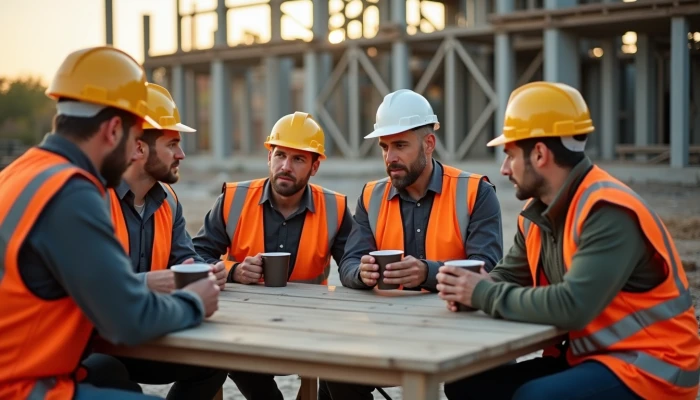
When Tough Workplace Culture Makes Mental Health Harder to Talk About
In many male-dominated industries, stress is treated like part of the job. Long hours, physical demands, safety pressure, shift work, and job insecurity can all wear people down. But the harder part is often cultural: many men learn that showing strain may be seen as weakness, unreliability, or a failure to handle the work.
That can make men's mental health harder to talk about in construction, manufacturing, trades, transport, and similar fields. A man may not say he feels depressed or anxious. Instead, he may describe being exhausted, angry after work, checked out at home, or unable to switch off. Over time, that silence can feed burnout, relationship strain, and emotional isolation.
This does not mean every man in these workplaces has the same experience. It does mean the work environment can shape how distress shows up and whether someone feels safe asking for help. Addressing that reality takes more than telling men to speak up. It also takes practical support, better workplace habits, and leadership that does not punish honesty.
Cultural Norms in Male-Dominated Workplaces
Male-dominated workplaces often reward endurance, self-control, and toughness. Those traits can help people get through demanding jobs, but they can also create a narrow idea of what strength looks like. When the message is "handle it yourself," men may hide symptoms until they become harder to manage.
Research on men, work, and mental health has linked traditional masculinity norms such as stoicism and dominance with lower help-seeking and higher risk of untreated depression, anxiety, and related struggles. Reviews focused on male-dominated industries have also found workplace risk factors that can increase mental strain, including high job demands, low control, poor support, and cultures that discourage vulnerability.
In practice, this stigma is not always obvious. It may sound like jokes about therapy, pressure to never call in sick, or the idea that personal problems should stay off the jobsite. It may also show up as silence. If no one talks openly about stress, men can assume they are the only ones struggling.
That silence matters because distress in men is not always easy to spot. The signs of depression in men may include:
- irritability rather than sadness
- emotional withdrawal
- working longer to avoid feelings
- increased drinking or other unhealthy coping
- trouble sleeping
- anger at home after holding everything in at work
- feeling flat, detached, or numb
For some men, emotional numbness in men becomes the most visible sign that something is wrong. They may not describe themselves as depressed. They may say they feel nothing, have no patience left, or cannot connect with family the way they used to.
A simple way to think about the problem is this:
| Workplace norm | How it can affect mental health conversations |
|---|---|
| "Push through no matter what" | Men delay asking for help until stress becomes severe |
| "Leave personal issues at home" | Depression or anxiety gets hidden instead of addressed |
| "Real workers can handle it" | Men fear being judged as weak or unreliable |
| Banter that mocks vulnerability | People stay quiet even when support is available |
None of this means toughness is bad. The problem is when toughness becomes the only acceptable response. Men need room to be capable and honest at the same time.
Practical Steps for Men to Seek Help
If your workplace culture makes mental health hard to discuss, it can help to start small and stay practical. You do not have to make a big announcement or use language that feels unnatural. The goal is to notice what is changing, reduce isolation, and connect with support early.
Start by paying attention to patterns, not just bad days. Stress becomes more serious when it keeps showing up in the same ways over time.
Use this quick check-in list:
- Am I more irritable than usual?
- Do I feel emotionally shut down after work?
- Am I sleeping badly most nights?
- Have I lost interest in things I usually care about?
- Am I using alcohol, overwork, or constant distraction to avoid how I feel?
- Are my relationships taking the hit from stress I never talk about?
If several of those feel familiar, that does not diagnose anything. It does suggest it may be time to take the next step.
A practical sequence can make help-seeking feel more manageable:
- Name the problem in plain language, such as "I am burned out," "I can't switch off," or "I've been on edge for weeks."
- Choose one confidential support option, such as an Employee Assistance Program, a primary care visit, a licensed therapist, or a mental health support line in your area.
- Tell one trusted person what has been going on, even if you keep it brief.
- Make one change that lowers pressure this week, such as taking a day off, setting a boundary around overtime when possible, or getting back to a basic sleep routine.
Many workplaces offer EAPs or counseling benefits, but men do not always use them because they worry about privacy or being judged. If that is your concern, ask directly how confidentiality works. Knowing the process can make support feel more usable.
Peer support can also help. In some settings, men are more willing to open up to a coworker, union rep, mentor, or supervisor they trust before they contact a clinician. That first conversation does not need to be dramatic. It can be as simple as, "I'm not doing great lately," or, "Work stress is spilling into everything else."
For stress management for men, the most useful habits are usually the least flashy:
- regular sleep when possible
- short decompression routines after work
- movement that is not only job-related strain
- cutting back on coping habits that leave you worse the next day
- talking sooner rather than later
If your symptoms are intense, keep getting worse, or are affecting safety, work, or relationships in a major way, professional support matters. If you are in immediate danger or think you may act on thoughts of harming yourself, contact emergency services or a crisis line right away.
Employer Strategies for Mental Health Support
Men should not have to carry this alone. Employers in male-dominated industries can reduce stigma by making mental health support part of everyday safety and workforce practice, not a side issue.
The first step is to treat mental health as a real workplace issue rather than a private weakness. Industry-specific pressures matter. Shift work, fatigue, injury risk, isolation, seasonal instability, and pressure to keep production moving can all affect mental health. Training works better when it reflects those realities instead of using generic office-language examples.
Useful employer actions include:
- mental health training tailored to the actual job environment
- supervisor training on how to notice changes in behavior and start respectful conversations
- clear communication about confidential support options
- leave, break, and scheduling policies that do not punish people for seeking help
- visible leadership messages that support help-seeking without shaming
Supervisors are especially important. In many workplaces, a manager's response determines whether someone speaks up again. Leaders do not need to diagnose anyone. They do need to know how to respond without minimizing, joking, or turning the conversation into a performance problem too quickly.
A simple manager response framework can help:
| If a worker says... | A helpful response sounds like... | Avoid saying... |
|---|---|---|
| "I'm struggling lately" | "Thanks for telling me. Do you want to talk about what support would help?" | "Everyone's stressed" |
| "I need a day off" | "Let's look at options and what you need right now" | "Can you just push through?" |
| "I'm not sleeping and I'm on edge" | "That sounds hard. We have confidential resources if you want them" | "Don't bring personal stuff to work" |
Some organizations have adapted mental health training specifically for trades and similar sectors. That kind of tailoring matters because workers are more likely to engage when examples fit their daily reality. Practical implementation guidance also commonly emphasizes promoting EAPs clearly, helping supervisors understand available resources, and making support visible before a crisis happens.
Flexible work is not always easy in physically demanding or shift-based jobs, but employers can still improve conditions. Even small changes can matter, such as making breaks more realistic, reducing unnecessary overtime where possible, supporting mental health sick leave, and creating return-to-work conversations that do not carry shame.
The broader goal is culture change. That usually happens through repetition, not one campaign. When leaders talk about mental health calmly, train supervisors well, and back up their message with policy, men are more likely to believe that asking for help will not cost them respect or job security.
Conclusion
Mental health struggles in male-dominated industries are not just individual problems. They are shaped by workplace norms, job demands, and the messages men receive about what they are allowed to feel and say.
That is why change has to happen in two directions. Men need practical ways to notice warning signs, speak up earlier, and use support without shame. Employers need to build cultures where honesty is not punished and help is easy to access.
The good news is that this does not require dramatic slogans or one-size-fits-all advice. It starts with clearer language, better training, confidential support, and everyday conversations that make room for reality. In workplaces where toughness is valued, one of the most useful shifts may be recognizing that getting support is not the opposite of strength. It is part of staying well enough to keep going.