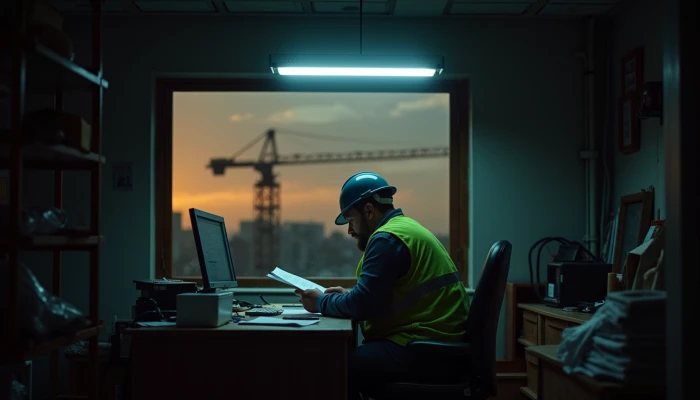
When Tough Work Cultures Make Mental Health Harder to Talk About
In many male-dominated industries, pressure comes from more than the job itself. Long hours, physical demands, safety risks, and job insecurity can wear people down. At the same time, workplace culture may send a clear message: keep going, stay quiet, and do not show struggle.
That combination can make men's mental health harder to recognize and harder to talk about. A man may not describe what he is dealing with as anxiety, depression, or burnout. He may say he is just tired, angry, checked out, drinking more, sleeping badly, or snapping at people at home.
This matters because mental health strain does not stay neatly at work. It can show up in concentration problems, conflict with coworkers, emotional numbness, relationship stress for men, and delayed help-seeking.
The good news is that support does not have to start with a dramatic disclosure or a perfect plan. It can begin with better language, safer workplace norms, and practical coping strategies that fit real life.
How Traditional Masculinity Norms Impact Mental Health
Traditional masculinity norms often reward stoicism, self-reliance, and emotional control. In many settings, those traits are treated as signs of strength. But when they become rigid rules, they can make it harder for men to notice distress, name it clearly, or ask for support.
Research on men and help-seeking has consistently found that conformity to narrow masculine expectations can be linked with lower mental health literacy and more reluctance to reach out. In plain terms, some men are taught to push through pain, distrust vulnerability, and see support as weakness rather than skill.
In male-dominated workplaces, those messages can become even stronger. If the culture celebrates toughness and mocks emotional openness, a man may stay silent long after stress has turned into something more serious. That silence can look like:
- irritability instead of sadness
- emotional numbness instead of clear distress
- overwork instead of rest
- substance use instead of support
- isolation instead of conversation
This helps explain why men and depression do not always look the way people expect. Some men do not say, "I feel depressed." They may say they feel flat, angry, exhausted, restless, or disconnected. Others may focus only on physical symptoms like headaches, poor sleep, or constant tension.
Another problem is shame. If a man believes he should always be in control, admitting he is struggling can feel like failure. He may worry about being judged by coworkers, seen as unreliable by supervisors, or becoming a burden at home. That fear can keep him stuck.
A useful reframe is this: talking about mental health is not the opposite of strength. It is a form of maintenance. Just as physical strain needs attention before it becomes an injury, emotional strain needs attention before it becomes a crisis.
If you are trying to spot early warning signs in yourself or someone close to you, this quick comparison can help.
| Often dismissed as "just work stress" | May be a mental health warning sign |
|---|---|
| Being tired after a hard week | Feeling drained most days and not recovering with rest |
| Wanting quiet after work | Pulling away from everyone for long periods |
| Occasional frustration | Frequent anger, snapping, or feeling on edge |
| Busy schedule affecting sleep | Ongoing poor sleep that worsens mood and focus |
| Needing downtime | Losing interest in things that used to help |
This kind of self-check is not a diagnosis. It is a prompt to pay attention sooner rather than later.
Workplace Pressures and Industry-Specific Stressors
Masculinity norms are only part of the picture. The work itself can create real mental strain.
Male-dominated industries often involve conditions that increase stress over time: long shifts, unpredictable schedules, physical wear and tear, safety pressure, production targets, understaffing, and limited recovery time. In some roles, workers also deal with isolation, travel, harsh environments, or pressure to stay productive even when exhausted.
These stressors can build slowly. A man may function well for months while becoming more short-tempered, detached, or worn down. By the time he notices something is wrong, the pattern may already be affecting sleep, focus, motivation, and relationships.
This is where male burnout symptoms can be easy to miss. Burnout is not simply being busy. It often includes emotional exhaustion, cynicism, reduced sense of effectiveness, and feeling like there is nothing left to give. In trades and similar sectors, burnout may be brushed off as part of the job.
Workplace culture can make that worse. In environments where people are expected to "handle it," workers may avoid speaking up about overload, stress, or mental fatigue. That delay matters. When people do not feel psychologically safe, they are less likely to seek help early, use support services, or tell someone they are not coping well.
Reviews of workplace mental health efforts in male-dominated industries have highlighted a recurring pattern: stigma, low mental health literacy, and macho workplace norms can all reduce help-seeking. That means the barrier is not only personal. It is cultural and structural too.
The effects often spill into home life. A person who spends all day managing pressure may come home with nothing left emotionally. That can lead to relationship stress for men, especially when a partner sees distance, anger, or shutdown but not the strain underneath it.
Common pressure points include:
- long hours that reduce sleep and recovery
- chronic physical strain that increases irritability and fatigue
- high-risk tasks that keep the body in a constant stress state
- job insecurity or unstable workloads
- crews where joking, silence, or toughness replace honest check-ins
A simple burnout check can help men notice patterns before they deepen.
Quick self-check: Over the past few weeks, have you noticed two or more of these most days?
- I feel used up before the workday is over.
- I am more angry or numb than usual.
- I am sleeping badly or waking up tense.
- I have less patience at home.
- I am relying more on alcohol or other unhealthy coping habits.
- I do not feel like myself, but I keep pushing through.
If that list feels familiar, it may be time to treat the issue as more than ordinary stress. That does not mean something is "wrong" with you. It means your current load may be too high for too long.
Practical Strategies for Addressing Mental Health in Male-Dominated Industries
Support works better when it fits the culture and the reality of the job. Men in high-pressure work environments often respond best to practical, direct approaches that reduce stigma rather than adding more pressure.
One strong starting point is peer support. In many workplaces, men are more likely to open up to someone who understands the pace, language, and demands of the job. That does not mean peers replace professional help. It means trusted coworkers, mentors, or supervisors can help make the first conversation feel safer.
Workplace mental health literacy also matters. When leaders and crews learn how stress, burnout, depression, and anxiety can actually show up in men, support becomes more realistic. Instead of waiting for someone to say the perfect words, people get better at noticing changes in behavior, mood, energy, and coping.
Practical coping strategies should be simple enough to use on a hard week, not only on a good one. For many men, stress management for men works best when it is concrete and repeatable.
Here is a useful sequence.
-
Name the pattern.
Notice what has changed: sleep, anger, motivation, drinking, isolation, focus, or tension. -
Reduce the load where possible.
Look for one pressure point you can change this week, such as overtime, skipped breaks, or staying constantly reachable off the clock. -
Add one stabilizing habit.
Choose one realistic action: a short walk after work, a consistent bedtime, a check-in with a friend, or ten quiet minutes before going inside at home. -
Use clearer language.
If talking feels hard, start with plain descriptions like "I am running on empty," "I have been on edge for weeks," or "I am not bouncing back." -
Reach out earlier.
Talk with a trusted person, use workplace support if available, or contact a licensed mental health professional if symptoms are persistent or worsening.
These strategies can help at both the individual and workplace level.
| Practical strategy | Why it helps | What it can look like |
|---|---|---|
| Peer check-ins | Reduces isolation and normalizes conversation | Brief end-of-shift check-ins or buddy systems |
| Supervisor training | Improves early recognition and response | Managers learning how to respond without judgment |
| Mental health literacy | Makes symptoms easier to identify | Toolbox talks, short trainings, or clear resource guides |
| Recovery habits | Supports stress regulation | Sleep routine, movement, hydration, breaks |
| Professional support | Adds structured care when needed | Therapy, counseling, employee assistance, primary care follow-up |
A few mistakes are worth avoiding.
- waiting until anger or shutdown causes major damage at home or work
- assuming help-seeking means weakness
- treating alcohol, overwork, or withdrawal as harmless stress relief
- expecting one conversation to solve a long-building problem
If you want a low-pressure way to begin, try this short script:
- "I have been more stressed than I realized."
- "I am not handling things as well as I usually do."
- "I do not need you to fix it, but I do need to talk."
- "I think I should get some extra support."
That kind of language can open the door without forcing a dramatic moment. For many men, that is what makes the next step possible.
Conclusion
Mental health struggles in male-dominated industries are not only about individual resilience. They are shaped by masculinity norms, workplace pressures, and cultures that can make silence feel safer than honesty.
That is why reducing stigma matters in practical ways. Better check-ins, clearer language, stronger peer support, and more realistic mental health education can help men recognize problems earlier and respond before stress turns into deeper burnout, depression, or relationship strain.
Men in these industries deserve support that respects how they live and work. If you are struggling, you do not have to wait until things fall apart to take it seriously. And if you care about someone who seems shut down, angry, or worn out, a calm, nonjudgmental conversation can be a meaningful place to start.
If symptoms feel persistent, severe, or hard to manage, reaching out to a licensed mental health professional, a primary care clinician, or an appropriate crisis resource is a strong next step.