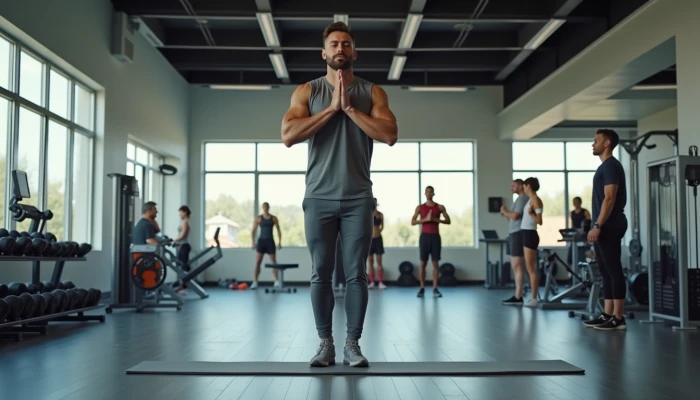
How Fitness Can Support Mental Resilience for Men
A lot of men are more comfortable talking about workouts than worry, burnout, or depression. That does not mean the emotional strain is not there. It often shows up in quieter ways: irritability, emotional shutdown, poor sleep, losing motivation, or feeling like you are always running on empty.
That is one reason fitness can be a useful entry point into men's mental health. A structured routine can create momentum, lower stress, and make it easier to notice what is happening internally. It can also give men a practical way to care for themselves without needing to have all the right words first.
At the same time, exercise is not a cure for depression, anxiety, or burnout. It works best as one support among others, which may include better sleep, stronger relationships, stress management for men, and professional help when needed.
This guide focuses on a simple idea: physical training can help build mental resilience when it is approached with realism, consistency, and self-awareness rather than pressure or shame.
The Science of Fitness and Mental Resilience
Exercise affects the body and mind at the same time. Mainstream medical guidance commonly notes that physical activity can reduce stress hormones and support the release of chemicals linked to improved mood and relaxation. That does not mean every workout feels good in the moment, but regular movement can make stress feel more manageable over time.
There is also a mental benefit in the structure itself. When life feels scattered, a repeatable routine can create a sense of order. Showing up for a walk, a lift, or a short mobility session gives you one clear task to complete. That can improve focus and help interrupt the spiral of overthinking.
For many men, resilience is less about becoming unshakable and more about recovering faster after a hard day. Fitness can support that recovery by giving stress a physical outlet and by reinforcing habits that carry over into emotional health for men, such as patience, pacing, and consistency.
It helps to think about physical and emotional discipline as related skills.
- In training, you learn that progress usually comes from repetition, not intensity alone.
- In mental health, the same is often true: small steady actions matter more than dramatic resets.
- In training, rest is part of progress.
- In mental health, recovery time matters too.
There is one important caution here. Fitness can support mental resilience, but it can also become a way to avoid deeper issues if it turns into overtraining, self-punishment, or constant distraction. If your routine leaves you more depleted, more isolated, or more angry after work, that is a sign to step back and reassess.
Practical Fitness Routines for Emotional Health
The most useful routine is usually the one you can keep doing when life gets busy. You do not need an extreme plan. If you are already stressed, a punishing schedule can backfire and make burnout in men worse rather than better.
Start smaller than your ego wants to. Short sessions still count, and brief bouts of movement can add up across the day. That matters for men who feel overwhelmed, low on time, or too drained to commit to long workouts.
A simple weekly framework can help.
| Goal | Simple option | Why it helps |
|---|---|---|
| Lower daily stress | 10 to 20 minute walk | Creates a mental reset and gets you moving without much friction |
| Build confidence and energy | 2 to 3 short strength sessions per week | Adds structure, visible progress, and a sense of capability |
| Reduce tension | 1 to 2 mobility or stretching sessions | Helps downshift physically and mentally |
| Stay engaged | One enjoyable activity such as cycling, swimming, or a class | Variety reduces boredom and all-or-nothing thinking |
If you want a low-pressure starting point, use this sequence.
- Pick one form of movement you can tolerate even on a rough day.
- Set a minimum version that feels almost too easy.
- Attach it to an existing part of your day, such as after work or after breakfast.
- Track completion, not perfection.
- Adjust only after two or three consistent weeks.
Tracking can improve self-awareness if you keep it simple. You do not need a complicated app. A notebook or phone note is enough.
Write down a few basics after each session.
- What you did
- How long you moved
- Your stress level before
- Your stress level after
- Anything you noticed about mood, sleep, or irritability
This kind of log can help you spot patterns. For example, you may notice that a short walk improves your mood more reliably than a hard workout when you are already exhausted. That is useful information, especially if you are trying to build healthy coping strategies instead of forcing yourself through routines that do not fit your current state.
Variety matters too. Some men connect with strength training because it feels concrete. Others do better with walking, yoga, martial arts, team sports, or cycling. The point is not to find the perfect program. The point is to build a repeatable relationship with movement that supports your nervous system instead of overwhelming it.
If you are noticing signs of depression in men such as low motivation, numbness, sleep changes, or pulling away from people, keep the bar low enough that you can still begin. On hard days, five or ten minutes may be the win.
Breaking Stigma Through Fitness Communities
One reason stigma stays strong is that many men feel they need to sort themselves out alone. Fitness settings can help challenge that belief when they create room for honesty, encouragement, and shared effort.
A healthy fitness community does not require emotional speeches. Often, stigma starts to loosen through ordinary moments: checking in before a workout, admitting you had a rough week, or hearing another man say he has been stressed, burned out, or struggling to sleep. Those small exchanges can make help-seeking feel more normal.
Group activities can be especially useful because they combine accountability with connection. Shared goals give men something practical to focus on while also reducing isolation. That matters because loneliness and shame often feed each other.
Not every fitness environment helps. Some spaces reward comparison, overtraining, or silence around distress. A better environment tends to look like this.
- Coaches talk about recovery, not just intensity.
- Progress is measured by consistency, not humiliation.
- Men are encouraged to modify workouts when needed.
- Stress, sleep, and life pressure are treated as relevant, not weak excuses.
- Support includes referrals outward when someone needs more than a workout can provide.
Coaches, training partners, and mentors can model a healthier standard by speaking plainly about stress and emotional strain. They do not need to act as therapists. What helps is showing that mental health conversations can exist alongside discipline, effort, and self-respect.
This is also where stigma reduction becomes practical. Research and clinical guidance on men's mental health support often emphasize compassion, understanding, and reducing shame as part of getting men engaged. Fitness communities can reinforce that message when they make it easier to say things like, "I have been off lately," or, "I think I need more support than this."
If you are looking for a more supportive environment, use this quick checklist.
- Do I leave feeling steadier, or more ashamed?
- Can I be honest about stress without being mocked?
- Does the culture respect rest and recovery?
- Are people encouraged to seek help when needed?
- Does the group support progress without turning everything into competition?
If the answer is mostly no, the issue may not be you. It may be the environment.
Conclusion
Fitness can be a strong support for mental resilience because it gives men something practical to do with stress, frustration, and low energy. It can improve routine, create a sense of progress, and open the door to more honest self-awareness.
But the goal is not to use exercise to outrun every difficult feeling. The goal is to make movement one part of a broader support system that may also include sleep, conversation, time outside, healthier coping habits, and professional care.
If you want to start, start small. Pick a routine you can repeat this week, not an ideal version of yourself you have to chase. And if your stress, anxiety, or low mood feels persistent or is affecting your safety, work, or relationships, reaching out for professional support is a strength, not a weakness.