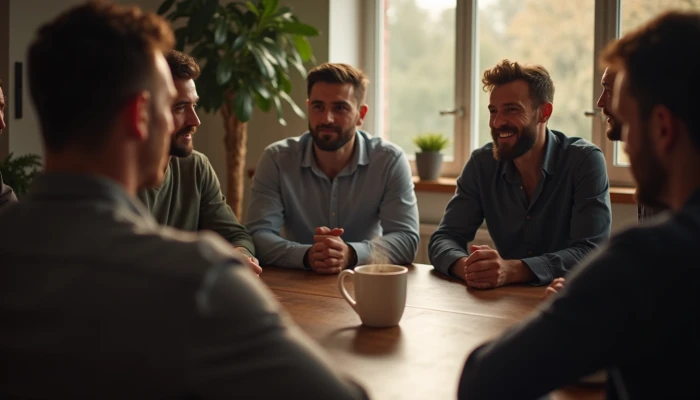
Why Peer Support Can Be an Easier First Step for Men
A lot of men struggle in private for longer than they need to. Stress builds, burnout starts to feel normal, relationships get tense, and emotional shutdown can look like "just being tired" or "keeping it together." Even when something feels off, reaching out can still feel uncomfortable, exposing, or hard to explain.
That hesitation is not just personal. Many men grow up with the message that they should handle problems alone, stay in control, and avoid looking vulnerable. When that mindset meets depression, anxiety, anger, or [emotional numbness](https://www.alisbh.com/blog/coping-with-emotional-numbness/) in men, isolation can deepen fast.
Peer support offers a different entry point. Instead of starting with diagnosis or formal treatment, it starts with shared experience. In the right group, men can talk openly, listen without judgment, and learn that they are not the only ones dealing with pressure, disconnection, or mental health warning signs.
That does not make peer support a replacement for professional care. But it can be a realistic, stigma-free form of men's mental health support and, for some men, the first step toward speaking more honestly and getting broader help when needed.
What Is Peer Support and How Does It Differ from Professional Care?
Peer support usually means people with lived experience of mental health challenges supporting each other through conversation, structure, and mutual understanding. In a men's group, that may include talking about stress at work, relationship strain, signs of depression in men, anger after work, loneliness, or feeling emotionally flat.
What makes peer support different is that it is built around shared experience rather than clinical expertise. A therapist is trained to assess, diagnose, and treat mental health conditions. A peer group is there to offer connection, perspective, and practical support from people who have faced similar struggles.
That difference matters because it sets realistic expectations. Peer support can help men feel less alone, practice stigma-free communication, and hear coping ideas that feel relatable. It is not the place for diagnosis, emergency intervention, or individualized medical advice.
A simple way to think about it is this:
| Peer support | Professional care |
|---|---|
| Based on lived experience | Based on clinical training |
| Focuses on mutual support and connection | Focuses on assessment and treatment |
| Often feels lower-pressure and more informal | Often follows a structured therapeutic process |
| Can help men open up and build trust | Can address symptoms in greater depth |
| Best seen as a complement to care | Not replaced by peer support |
Research and mental health organizations commonly describe peer support as valuable because it can reach people who might not otherwise seek help. That is especially relevant for men who are wary of formal settings or unsure how to talk about mental health in the first place.
In practice, a good peer group often helps with three basic things:
- putting words to what has felt hard to explain
- hearing that other men have had similar thoughts or reactions
- learning practical coping strategies that feel doable in daily life
For some men, that first experience of being heard by peers lowers the barrier to other forms of support, including men's therapy or a conversation with a doctor.
How Peer Groups Challenge Traditional Masculinity Norms
Many men are not just dealing with mental health symptoms. They are also dealing with the pressure to hide them. Traditional masculinity norms can teach men to stay stoic, solve everything alone, and avoid emotional openness unless there is a clear practical reason for it.
That can make ordinary help-seeking feel like failure. It can also make common struggles harder to recognize. A man may notice irritability, withdrawal, overwork, or emotional numbness without connecting those experiences to stress, anxiety, depression, or burnout in men.
Peer groups can interrupt that pattern because they change the social rules in the room. When one man speaks honestly about feeling overwhelmed, ashamed, disconnected, or stuck, it gives others permission to do the same. Vulnerability stops looking like weakness and starts looking like honesty.
This shift is important because stigma often fades through experience, not just information. Men may already know, in theory, that mental health matters. What they often need is a setting where openness is normal, respected, and not punished.
Shared identity can help too. Some programs built around common backgrounds, including groups for veterans and other communities with strong cultural expectations around toughness, show how peer support can create trust faster. Men may find it easier to open up when they feel understood by people who speak a familiar language about pressure, duty, and emotional control.
A healthy peer group does not tell men to reject strength. It widens the definition of strength.
That can include:
- saying when stress is affecting your sleep, mood, or relationships
- listening without trying to dominate or fix everything
- asking for support before things get worse
- speaking about fear, grief, anger, or numbness in direct language
- recognizing that self-protection can become emotional shutdown
Over time, that kind of environment can help men build a more flexible way of relating to themselves and others. Instead of choosing between silence and collapse, they get practice with honest, grounded communication.
The Practical Benefits of Peer Support for Men’s Mental Health
The biggest value of peer support is often practical. Men do not always need a perfect explanation before they need a place to start talking. A group can offer that starting point without demanding that someone arrive with the right labels or a polished story.
That matters for issues that are easy to hide. Emotional numbness in men, for example, may show up as detachment, low interest, disconnection from other people, or going through the motions. In a peer setting, a man may hear someone describe that same flatness and realize he is not simply "bad at feelings" or alone in it.
Peer groups can also support stress management for men in concrete ways. Instead of abstract advice, members often swap realistic habits, language, and routines that fit everyday life. That might include better ways to talk with a partner, small changes that reduce isolation, or ways to notice when work stress is turning into anger or shutdown at home.
Here is a simple checklist for deciding whether a peer group may be worth trying:
- You feel isolated but do not know how to start asking for help.
- You want support from people who have lived through similar struggles.
- You are more comfortable talking in a group than starting with one-on-one care.
- You want practical ideas for coping, not just general encouragement.
- You have trouble naming what you feel but know something is off.
- You want a space where vulnerability is treated with respect.
Peer support can also improve communication by giving men repetition. Many men have had little practice describing internal experiences in plain language. In a group, they can try that out, hear better words from others, and slowly become more direct with partners, friends, and family.
Some of the most useful benefits are modest but meaningful:
- less isolation
- more emotional vocabulary
- more realistic coping strategies
- better recognition of stress patterns
- more confidence in asking for help
These are not instant changes, and they are not the same for everyone. But they can make a real difference, especially for men who have spent years coping through avoidance, overwork, irritability, or withdrawal.
It also helps to know what to look for in a group. A useful peer support space usually has a few clear features:
| Helpful signs | Caution signs |
|---|---|
| Clear group guidelines | Pressure to overshare before you're ready |
| Respectful listening | Shaming, mocking, or one-upmanship |
| Space for different experiences | Rigid ideas about what a "real man" should be |
| Encouragement to seek added help when needed | Claims that peer support should replace therapy or medical care |
| Practical, grounded discussion | Advice that sounds extreme or one-size-fits-all |
If a group feels safe, respectful, and realistic, it can become a strong support layer. Not the whole answer, but a meaningful one.
Conclusion
Peer support matters because many men need a bridge before they are ready for more formal help. A good group can reduce isolation, make honest conversation feel safer, and challenge the idea that men have to carry everything alone.
Just as important, peer groups can help men practice a different kind of strength: naming what is hard, listening without judgment, and learning healthier ways to cope with pressure, burnout, disconnection, and relationship stress.
That does not make peer support a substitute for professional mental health care. But it can be a solid first step, a useful complement to therapy, and a practical form of connection for men who want support that feels human, direct, and stigma-free.